Can I Upload My Own Htmls on Blue Hosting
Cloudwards.cyberspace may earn a modest commission from some purchases made through our site. Even so, any affiliate earnings do non affect how we review services.

- How to Host Your Website at Home
- Hosting on Windows
- Testing WampServer
- Configure MySQL Databases
- Brand Your Website Alive
- Adding a Domain Name
- Tips for Windows Hosting
- Hosting on Linux
- Check PHP
- Configure MySQL
- Configure Apache
- Pros and Cons of Hosting Your Ain Website
- Determination
- Comments
Hosting your own website is an experience as entertaining every bit it is rewarding. Using an old Windows or Linux automobile, you can throw a few HTML files into a folder and put them on the internet all past yourself.
It's of import to know exactly what you're doing when hosting a website, though. Your computer will act as a server, a machine congenital with the purpose of storing and sending your data beyond the internet, allowing your site to appear to anyone in the world.
Essentially, that'south all web hosting is. Your machine is merely a tool for housing data and uploading it to the network. However, there are some other pieces of software that ensure this process runs smoothly.
Before diving in, nosotros'd similar to make a note. Nosotros're putting up this guide for educational purposes merely. We don't recommend you host your own website, as it'll bring too many performance and consistency bug. If you're serious nearly putting up a website, endeavor out Hostgator or SiteGround, two of our favorite hosting providers for ease of use, pricing and speed.
How to Host Your Website at Dwelling house
Nosotros're going to run over how to host your own website on Windows and Linux using your abode machine and a normal desktop environment. Our tutorial will help you lot put upwardly a test website, only it'southward up to y'all to design it.
For our tutorial, we're using the AMP stack. Don't worry if you're not familiar with this term however, as we'll run through each of the technologies throughout the tutorial.
Hosting on Windows
If you have an extra Windows computer gathering dust, you lot tin can turn it into a web server. The procedure is fairly straightforward, aided by the AMP stack. This bundle includes Apache, MySQL and PHP, commonly referred to on Windows equally WAMP. I'm sure you tin can discern why.
There are several installation programs, just nosotros'll utilize WampServer because it'southward the virtually straightforward. Caput to the Wamp server website and download either the 32-bit or 64-scrap executable, depending on your Os.
If your car has Skype running during the installation, you'll become a "port 80" conflict. WampServer and Skype both utilize port 80, so just disconnect from Skype before running WampServer and you lot'll exist fine.
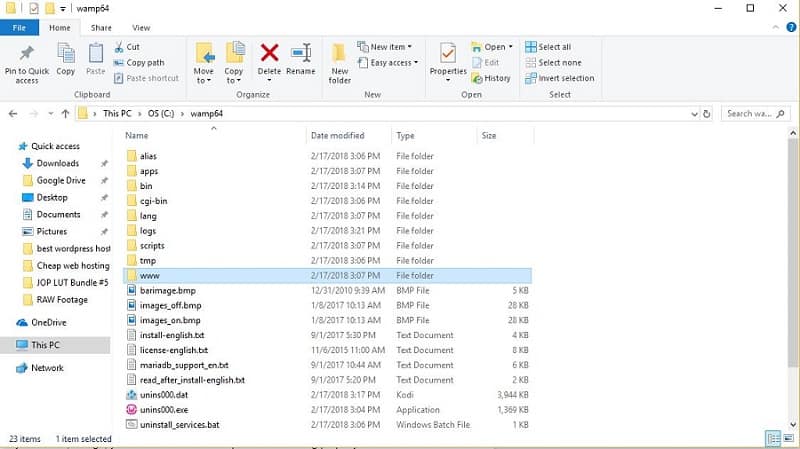
Information technology will automatically create a "world wide web" directory, which is usually institute at "c:\wamp\www". This is where your website (or websites) volition alive. But create a new folder in the directory and business firm your PHP or HTML files within.
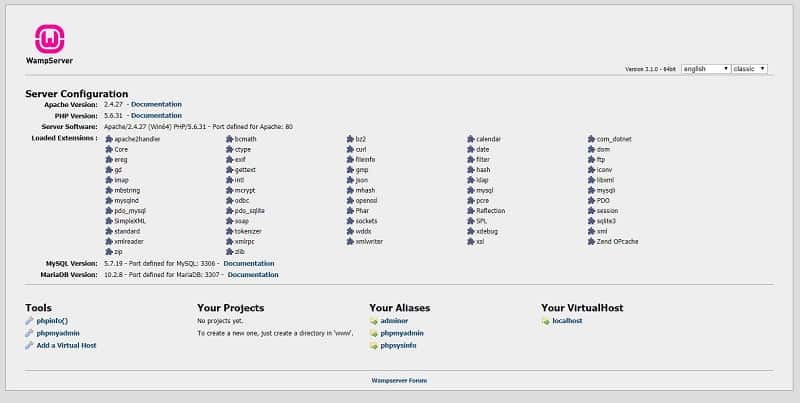
Before yous exercise that, though, you need to test that WampServer is working properly. Y'all can access the main screen of WampServer by either clicking on the link in the menu or opening a web browser and going to "http://localhost".
Testing WampServer
Congratulations, your Windows estimator is at present a server, only it'due south not really doing much right at present. We need to exam it to brand sure that everything is flowing properly before adding your files and making them live on the internet.
We'll brand a simple test PHP file and put it into the directory. Open up NotePad in Windows and enter the post-obit line:
<title>PHP Test</championship>
Tweet This
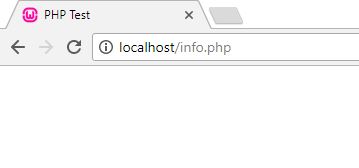
Salvage that file as "info.php" in the "www" directory created past WampServer. Open up your spider web browser back upward and head to "http://localhost/info.php". If you lot see a blank page with "PHP Test" on the tab name, then everything is running how it should.
Configure MySQL Databases
If you aren't using a CMS like WordPress (if you are, yous may desire to read our guide on the all-time web hosting for WordPress), y'all'll need to configure your MySQL databases. This is an open up-source Relational Database Management System (RDBMS) that uses Structured Query Language (SQL).
For a less acronym-focused definition, MySQL organizes the information of your website into a database that can rapidly observe and transmit that data. A Content Management Organization (CMS) uses MySQL as a way to ship that information off equally efficiently as possible to the user.
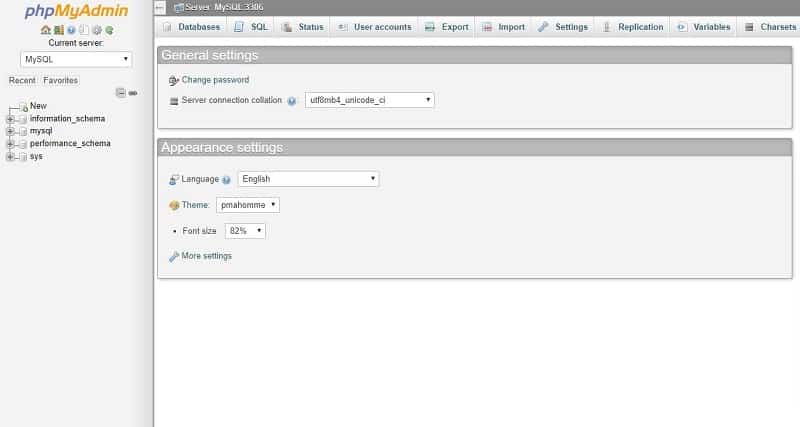
You tin can modify existing databases or create new ones by clicking on "phpMyAdmin" in the "tools" department of the Wamp Server main screen. It'll open a new tab requesting a username and password. The username volition be "root" by default, and you can leave the countersign field bare.
If you program on using a CMS, you may never need to swoop into this area. For example, WordPress will create a MySQL database for you when it installs. Either way, information technology's a bad idea to poke around here unless you know what you're doing.
To ensure that MySQL is working properly, though, open a new tab and go to "http://localhost/testmysql.php" — it will show you the IP accost of your motorcar and let you know if the connexion is good or not.
Make Your Website Live
The Apache configuration file is set to deny any incoming connections by default. That means your local auto is the only one that tin admission your website. This is proficient for getting a test site running, just you lot'll need to change the configuration in one case you lot're ready to become alive.
Get to the WampServer bill of fare and click on "Apache" and and so "httpd-vhosts.conf".
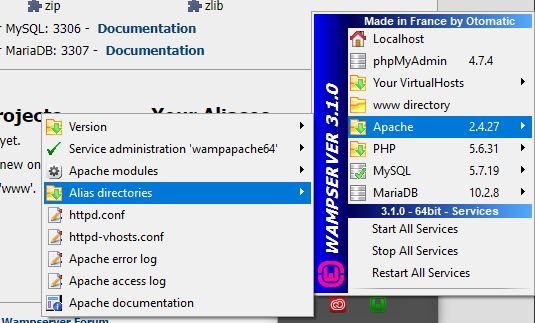
This is your Apache configuration file, and it should take the following lines inside:
# Virtual Hosts
#
<VirtualHost *:80>
ServerName localhost
ServerAlias localhost
DocumentRoot "${INSTALL_DIR}/www"
<Directory "${INSTALL_DIR}/www/">
Options +Indexes +Includes +FollowSymLinks +MultiViews
AllowOverride All
Require local
</Directory>
</VirtualHost>
Tweet This
To allow incoming connections, only change "require local" to "crave all granted" and you'll exist skilful to become.
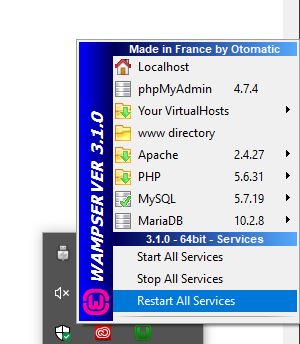
Restart WampServer past selecting "restart all services" in the menu, and the changes will take event. You may demand to double-bank check that your PC firewall isn't blocking web requests, but it should be set after that.
Calculation a Domain Name
No one is going to memorize the folder bureaucracy to admission your website, though. You'll demand a domain name that points back to your local car for piece of cake input into any spider web browser. The server does so with DNS records.
You can read our article on DNS records to acquire the specifics, only basically it's a organization that ties your local IP address to a domain name. For example, if your server IP was 199.999.999, then the DNS records would know to access that server when your domain name is keyed in.
Once yous have an a record for your domain in the DNS records, you need to update your local host file. Get to "C:\Windows\system32\drivers\etc\hosts file" and add the following line to the bottom (don't include what's in parentheses beneath):
199.999.999.99 (your IP address) example.com (your domain name)
Tweet This
Next, yous need to add a file manually into "C:\wamp\bin\apache\Apache-VERSION\conf\extra\", where VERSION is your version of Apache. Create a file in NotePad with the following lines:
ServerAdmin [e-mail protected]
DocumentRoot "c:\wamp\world wide web"
ServerName mysite.localErrorLog "logs/case.com.log"
Tweet This
CustomLog "logs/example.com-access.log" common
Of course, replace "example.com" with your domain name. Once your domain name is set, save the file in the Apache directory and your website volition be accessible via its domain name.
Tips for Windows Hosting
Although a normal motorcar volition get y'all upwardly and running, it'due south the not the nearly ideal setup considering Windows is one of the more resource-intensive operating systems. Unless you take a lot of power to play with, you'll need to optimize the operating arrangement for spider web hosting.
The first step is to uninstall every application that y'all won't exist needing. Although keeping a web browser around is crucial for accessing the WampServer control panel, near everything else tin can go the ax.
Next, disable whatever startup applications that may be running in the background. There are a few applications that Windows needs in society to operate, so use your best judgment on which to disable. You can find the list in the task director.
If you're serious about using a Windows machine for web hosting, then it'due south worthwhile to invest in a re-create of Windows Server, as well. This Os is much more lightweight, streamlined for running on any server, whether it'due south for web hosting or but for storage.
Hosting on Linux
If you plan on building a car from scratch, then Linux is probably the ameliorate choice. This lightweight piece of kit is the chameleon of operating systems, allowing y'all to suit information technology to nearly every need.
The process is similar to Windows, except you need a LAMP parcel instead of a WAMP bundle. I'yard sure you can figure out the difference. To call back the stack, open up the terminal and enter the post-obit line:
sudo apt install apache2 mysql-server php libapache2-modernistic-php7.0
Tweet This
During installation, you'll be asked to set a password for the "root" user. You tin can set it to any y'all want or just exit it blank. Once the installation is complete, y'all'll need to restart the Apache web server.
Y'all'll need to do this any time you change the global configuration of Apache unless you do information technology using the local .htaccess files. To restart, enter the post-obit command:
sudo /etc/init.d/apache2 restart
Tweet This
Check PHP
Like with Windows, nosotros need to ostend the PHP server works earlier moving forward. We'll apply the same process as before by placing a exam file into the "www" binder that, on Linux, is plant at "/var/www/html/". Create a file with the following line and place it in the directory:
sudo echo "" > /var/www/html/info.php
Tweet This
Head to "http://localhost/info.php" and encounter if the page loads. Yous should be able to see the PHP version, current configuration and installed modules here as well.
Configure MySQL
Later confirming PHP is working, it's time to check the MySQL databases. If you programme on using a CMS like WordPress, it'southward important non to skip this step.
Open the terminal and enter the following line:
service mysql status
Tweet This
After a few moments, you should get this issue:
$ service mysql condition
[…]
- mysql.service – MySQL Community Server
mrt fifteen xvi:02:14 host1 systemd[ane]: Started MySQL Community Server.
If the server isn't working, just type in "sudo service mysql restart" to restart the MySQL server. After you get it working, you can use the MySQL command line client to manage your databases. To do and then, recall the credentials you entered when MySQL was installed and enter the following:
$ mysql -u root -p
Tweet This
Usually, a CMS will install the database for y'all, and so you lot won't demand to fuss around hither. All the same, there are a few things y'all can do manually, such as create a backup of your databases. For those who want a more user-friendly manner to do so, you can install PHPMyAdmin by entering the following line:
sudo apt install phpmyadmin
Tweet This
It's an easy-to-utilise database management tool that circumvents the lines of code for managing your databases.
Configure Apache
The last stride is to allow Apache to take incoming web requests from the domain name in your DNS records. If you demand assistance setting up these records, contact your DNS hosting provider because they should accept an online tool for you lot to configure them.
Enter the following lines in the last:
sudo mkdir -p /var/www/html/example.com
sudo sh -c 'echo "<championship>instance.com</title><h1>This is my self-hosted site instance.com</h1>" > /var/www/html/instance.com/alphabetize.html
sudo chmod -R 755 /var/www/html/example.com
Tweet This
This sets up the directory for your domain. You need to set up upwards a "virtual host" file for Apache to see the page, though. Enter the following lines:
sudo cp /etc/apache2/sites-available/000-default.conf /etc/apache2/sites-available/instance.com.conf
Tweet This
And
sudo nano /etc/apache2/sites-available/instance.com.conf
Tweet This
Now, edit the Apache file to lucifer this:
ServerAdmin [email protected]
ServerName example.com
ServerAlias www.case.com
DocumentRoot /var/www/html/example.com
ErrorLog ${APACHE_LOG_DIR}/error.log
CustomLog ${APACHE_LOG_DIR}/access.log combined
Tweet This
Reload Apache for the changes to take effect by entering the following:
sudo a2ensite example.com.conf
sudo service apache2 reload
Tweet This
Like with Windows, simply add your IP address and domain name to your machines hosts file to lucifer it locally.
Pros and Cons of Hosting Your Ain Website
Not everything is great virtually hosting your own website, though. The initial cost savings of not paying for a hosting plan is about the only upside, only even that falls short in the long run.
Running your own server volition rack up the electricity bill faster than you lot can say "shared hosting." Your server volition need to be turned on and connected to the cyberspace all the time, so the cost will actually end up far higher than buying an inexpensive spider web hosting plan with a hosting company.
That'south not even because the potential for cyberspace outages in residential areas. If your area is decumbent to frequent internet connection outages, your website's stability will be all over the identify, particularly without a loftier-powered internet service provider to back it up.
Costs are high, simply the practicality of hosting your own website just isn't there. Your website will be victim to slow connections, hurting it in Google search rankings and turning away potential visitors. While many inexpensive hosting providers deal in the one to two 2d range, a residential connection will probably deal in the 15 to xx second range.
The process of putting your own website online is best used equally an educational tool to sympathise how spider web hosting works. By exposing yourself to all the website-hosting tools, you'll exist able to configure your website better with an external host.
If toll is a concern, check out our list of the best cheap web hosting options, where nosotros break downwards providers that give first-class service at decent rates. Our favorite choice there is iPage.
Even so, hosting a website is certainly an pick for staging or if you lot plan on running a small WordPress blog. If that'south you, brand certain to bank check out our guides to using WordPress.
- Beginner'south Guide to Using WordPress
- Intermediate Guide to Using WordPress
- Advanced Guide to Using WordPress
Conclusion
Hosting your ain website is about as much fun equally geeks (like united states) can take. It's an opportunity to play with new tech toys on onetime hardware, and learn more about the web hosting world and how it functions.
Unfortunately, that'due south its best use. Unless you have some serious ability backside your server, it'southward difficult to make hosting a website a viable option, both practically and budgetary. For that, we've ranked the all-time web hosting providers, so yous tin can make an informed choice.
Are you fix to get started and eager to host a website? How did your dwelling house hosting experience go? Will you use a web hosting service instead? Let the states know in the comments beneath and, every bit always, thanks for reading.
Source: https://www.cloudwards.net/how-to-host-your-own-website/
0 Response to "Can I Upload My Own Htmls on Blue Hosting"
Post a Comment